Yes, research shows that ABA-based interventions can help autistic individuals improve skills such as communication, learning, daily living, and independence. But, results vary from person to person, so ABA therapy effectiveness depends on individual needs, goals, and the quality of treatment.
Applied Behavior Analysis, commonly known as ABA therapy, is one of the most researched behavioral approaches used to support autistic individuals. Yet many parents and caregivers still have an important question before starting treatment: does ABA therapy work?
The evidence suggests that ABA-based interventions can help with a range of meaningful outcomes, including communication, adaptive behavior, daily living skills, learning, and the reduction or replacement of behaviors that interfere with everyday life. However, results are not identical for everyone, and the quality and individualization of therapy matter greatly.
It is also important to understand that ABA is not one single treatment. The 2025 National Academies review explains that ABA includes different behavioral practices, such as reinforcement, prompting, functional communication training, and naturalistic interventions, as well as broader comprehensive programs.For families trying to make an informed decision, the better question is not simply whether ABA works. It is whether a particular ABA program is using appropriate methods to help a particular person reach meaningful goals.
Exploring ABA Therapy and How It Works
Applied Behavior Analysis, or ABA, is a structured approach that uses principles of learning to help people build useful skills and make positive changes in everyday situations. It focuses on understanding what may be influencing a behavior and finding practical ways to support learning.
ABA can be used to work on areas such as communication, daily routines, independence, social participation, and other functional skills. Progress is usually monitored so therapists can see what is helping and make changes when needed.There is no single way to deliver ABA. Some sessions may involve structured skill practice, while others use play, everyday routines, or activities that naturally interest the individual.
Because every autistic person has different strengths and support needs, effective ABA should be personalized. The goals and teaching methods should reflect the individual’s abilities, priorities, and everyday challenges rather than following a standard plan for everyone.
How Does ABA Therapy Work?
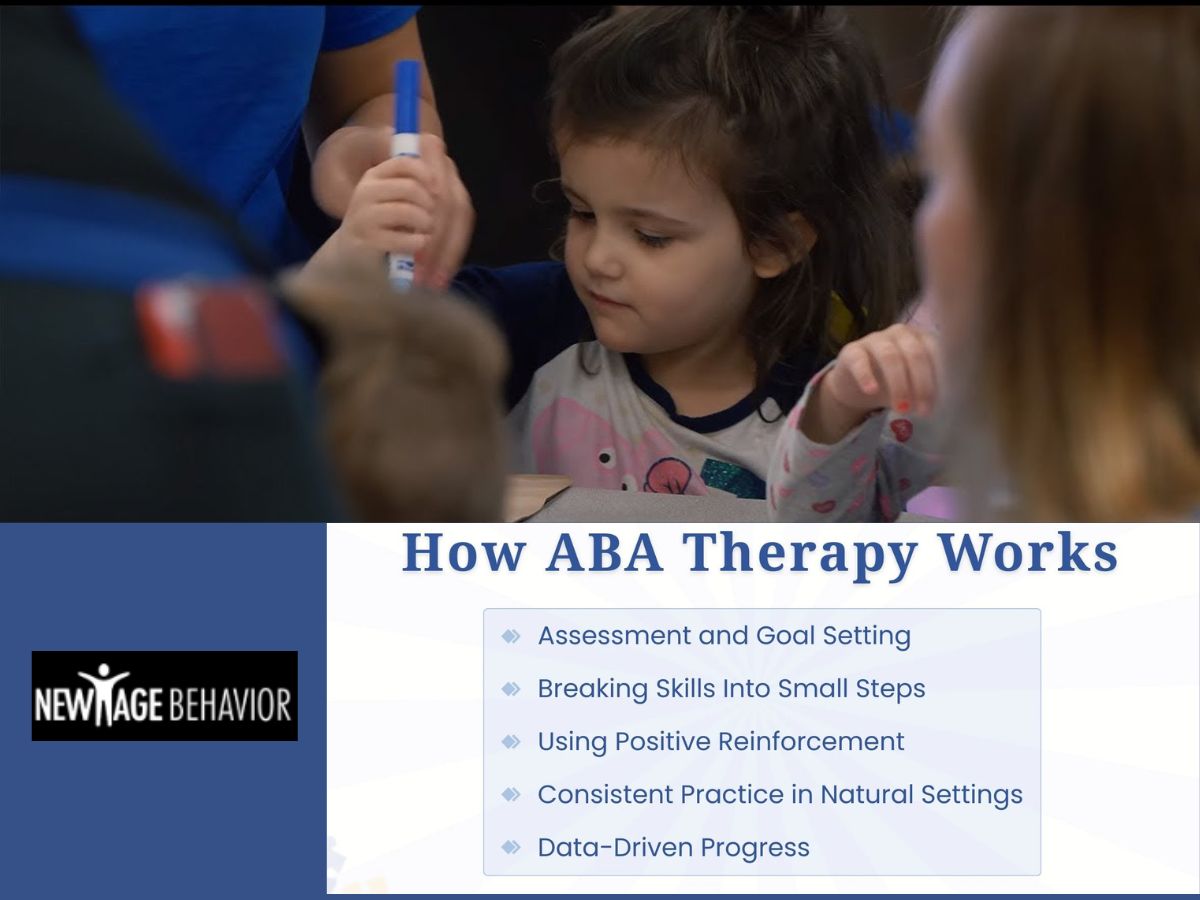
ABA therapy begins by identifying a specific skill or behavior that needs attention. The therapist then looks at the situations surrounding that behavior and considers what may be influencing it.For example, a child may become upset when asked to complete a difficult activity. Instead of simply trying to stop the behavior, the therapist may consider whether the child understands the task or has an effective way to ask for help.
The intervention may then teach a replacement skill. The child could learn to request assistance, ask for a break, use visual support, or communicate that the task is too difficult.
This approach can make therapy more practical because the goal is not simply to change what someone does. It is to help them develop a more useful way to communicate, learn, participate, or manage a situation.
What Does the Research Say About ABA Effectiveness?
Research provides substantial support for ABA-based interventions, although the evidence is more nuanced than a simple statement that ABA works for everyone.The 2025 National Academies review examined evidence from comprehensive ABA programs and focused behavioral practices. It concluded that there is a substantial body of research supporting the efficacy and effectiveness of ABA-based interventions and determined that the evidence meets the relevant standard for reliable evidence of proven medical care.
The review found positive effects for comprehensive ABA programs on important outcomes such as cognitive ability and adaptive behavior. It also reported positive effects in areas including communication, language, and daily living skills, although some secondary outcomes showed more modest effects.
The evidence is also not limited to very young children. The National Academies review found research on focused ABA practices involving participants ranging from young children through adults, with positive effects reported across communication, academic, social, adaptive, vocational, and quality-of-life outcomes.
At the same time, individual research studies have limitations. Differences in study design, participant characteristics, intervention methods, treatment intensity, and outcome measures can make it difficult to predict exactly how much improvement one individual will experience.
That is why evidence should guide treatment decisions without creating unrealistic promises. Research can show that an intervention can work, but it cannot guarantee that every person will experience the same result.
What Are the Results of ABA Therapy?
ABA therapy results can appear in many different forms. For one person, success may mean learning to communicate a basic need more reliably. For another person, it may mean becoming more independent with dressing, meal preparation, or a daily routine. Someone else may benefit from learning strategies that make transitions, school activities, or community participation easier.
The National Academies review found positive effects from comprehensive ABA programs on cognitive ability and adaptive behavior, with additional positive findings for communication, language, and daily living skills. However, meaningful results should not be measured only by what happens inside a therapy room. A skill becomes much more valuable when the person can use it in everyday situations.
For example, learning to request help from a therapist is useful. Learning to request help from a parent, teacher, caregiver, or another trusted person when needed is even more functional.
Why Do ABA Therapy Results Vary?
One reason results vary is that autism is highly diverse. Individuals can have very different communication abilities, learning profiles, sensory needs, strengths, and support requirements.The goals being targeted also make a difference. A simple skill may develop relatively quickly, while a complex adaptive skill can require longer and more consistent support.
The quality of implementation matters as well. A therapy plan may look effective on paper but produce limited progress if it is not implemented consistently or if the teaching strategy does not match the individual.
The National Academies review emphasizes implementation as an important factor affecting ABA services and outcomes. It also stresses that ABA intensity and modality should be based on individual needs and goals rather than applying a uniform amount of therapy to everyone.
Does More ABA Therapy Mean Better Results?
Not necessarily. One of the common misconceptions about ABA is that more hours automatically produce better outcomes.Research has examined the relationship between ABA intensity and results, but there is not a simple number of hours that is appropriate for every person. The National Academies specifically states that ABA intensity should be individualized based on factors such as goals, other services, learning rate, and input from the individual and family.
This means families should be cautious about programs that present a fixed number of hours as the right answer for everyone. The appropriate level of support should reflect the person’s needs. Therapy should also leave room for school, family life, rest, preferred activities, and other important parts of everyday living.
Perks of ABA Therapy
The benefits of ABA therapy can include improved communication, adaptive behavior, daily living skills, learning, and independence. Another potential benefit is that ABA can break complicated skills into smaller steps. This can make a difficult activity easier to understand and practice.
ABA also commonly involves data collection. Tracking progress can help families and providers determine whether a strategy is producing meaningful changes. Another advantage is flexibility. Because ABA includes many different practices, it can be adapted to structured teaching, naturalistic activities, communication goals, or everyday routines.
The greatest benefit comes when these strategies are used to address goals that actually matter to the person receiving therapy.
ABA Therapy Pros and Cons
When researching ABA therapy pros and cons, it is important to consider both the evidence and the individual’s experience.
One advantage is the ability to create individualized goals and measure progress. ABA can target specific skills instead of relying on a general treatment plan.
Another potential advantage is the breadth of behavioral practices available. The National Academies notes that ABA includes practices such as reinforcement, prompting, functional communication training, and naturalistic intervention rather than being limited to one technique.
There are also important concerns to consider. Some autistic individuals and advocates have criticized ABA approaches that focus too heavily on compliance or attempt to eliminate harmless autistic behaviors.
This makes provider selection extremely important. Families should ask what behaviors are being targeted, why they are being targeted, and how the goals are connected to the individual’s quality of life.
How Can Families Tell if ABA Is Working?
Families can start by looking at the goals established at the beginning of treatment. Ask whether those goals are still relevant and whether measurable progress is occurring.Then look at everyday life. Is communication becoming easier? Is the individual becoming more independent? Are daily routines becoming more manageable?
It is also important to ask whether the person can use newly learned skills outside therapy. If a skill appears only during a session, the provider may need to work more on generalization.
The individual’s experience should also be considered. A successful program should not be evaluated only by data. Comfort, engagement, communication, autonomy, and quality of life matter too.
What Are Common ABA Therapy Mistakes?
One common mistake is choosing goals based on appearance rather than function. A harmless behavior should not automatically become a therapy target simply because it looks different from typical behavior.
Another mistake is focusing only on stopping challenging behavior. Understanding why a behavior happens can lead to better solutions.
For example, if a child becomes upset because they cannot communicate, teaching communication may be more useful than focusing only on reducing the visible behavior.
Another mistake is failing to adjust the treatment plan. If progress is limited, continuing the same strategy without examining why it is not working can waste time and resources.
Families should also be cautious about assuming that more hours always mean better therapy. The goal should be effective support, not simply a higher number of therapy hours.
ABA Therapy and Naturalistic Learning
ABA does not have to take place in a highly structured clinical environment. Naturalistic approaches can integrate learning into play, daily routines, and activities that are meaningful to the individual.
The National Academies notes that Naturalistic Developmental Behavioral Interventions combine behavioral and developmental principles and can emphasize interests, choices, motivation, and child-directed learning.
This approach can make it easier to practice skills in situations where they are naturally needed. For example, communication can be practiced during snack time, play, shopping, or another activity rather than only during a formal lesson.
ABA Therapy Compared With Other Autism Supports
ABA is one part of the broader range of support available to autistic individuals. Speech therapy, occupational therapy, educational services, developmental approaches, and mental health support may also play important roles.
The CDC recognizes multiple categories of autism interventions, including behavioral, developmental, educational, social-relational, and psychological approaches.For some individuals, combining different services may provide more comprehensive support.
The goal should not be to determine which therapy is universally best. Instead, families and professionals can consider which combination of services addresses the person’s specific needs.
How to Choose an ABA Provider
Start by asking how the provider develops treatment goals. The provider should be able to explain why each goal is important and how it relates to everyday life.
Ask how progress is measured and how often the treatment plan is reviewed. You should also ask what happens if the person does not make expected progress.
It is useful to ask how the provider handles distress or refusal. A thoughtful provider should be willing to understand why the individual is struggling and adapt the approach when appropriate.
Families should also ask how skills will be generalized to home, school, and community settings. A good provider should welcome questions and communicate clearly about both progress and limitations.
Final Thoughts
So, does ABA therapy work? Research suggests that ABA-based interventions can help many autistic individuals develop useful skills in areas such as communication, daily living, adaptive behavior, and learning. However, the results can vary from person to person, so ABA should not be viewed as a guaranteed solution for everyone.
The effectiveness of ABA often depends on how well the therapy matches the individual’s needs and goals. A good program should use appropriate strategies, track progress, adjust when needed, and focus on skills that have real value in everyday life.
When considering ABA therapy, it is helpful to look beyond the number of therapy hours or the name of the treatment. What matters most is whether the person is making meaningful progress, becoming more independent, communicating more effectively, and participating more comfortably in daily activities.
FAQs
Does ABA therapy really work?
Yes, research shows that ABA-based interventions can help many autistic individuals develop skills in areas such as communication, adaptive behavior, learning, and daily living. However, results vary from person to person, so therapy should always be personalized.
How effective is ABA therapy?
The effectiveness of ABA therapy depends on several factors, including the individual’s needs, treatment goals, therapy approach, and quality of care. Regular progress tracking can help determine whether the treatment is producing meaningful results.
What does ABA therapy help with?
ABA therapy may help with communication, social participation, daily living skills, learning, independence, and behaviors that interfere with everyday activities. The specific goals depend on the person’s individual needs.
How long does it take for ABA therapy to work?
There is no set timeline for ABA therapy. Some skills may develop relatively quickly, while others can take more time and practice. Progress should be reviewed regularly rather than following the same timeline for every individual.
What are the benefits of ABA therapy?
The benefits of ABA therapy can include improved communication, greater independence, stronger adaptive skills, better participation in daily activities, and progress toward specific learning goals.
What are the pros and cons of ABA therapy?
ABA can provide personalized goals, structured learning, and measurable progress. However, concerns may arise when therapy is too rigid, focuses mainly on compliance, or uses goals that are not meaningful to the individual.
Does ABA therapy work for older children and adults?
Yes. ABA-based approaches can be used with people of different ages. The goals and teaching methods should be adjusted according to the person’s age, abilities, needs, and daily responsibilities.
Does more ABA therapy mean better results?
Not necessarily. More therapy hours do not automatically lead to better outcomes. The amount of therapy should be based on the individual’s needs, goals, progress, and overall daily routine.
How can parents tell if ABA therapy is working?
Parents can look for meaningful changes in everyday life. Improved communication, greater independence, easier daily routines, and the ability to use learned skills in different settings can all be signs of progress.
Can ABA therapy be used with other therapies?
Yes. ABA may be combined with services such as speech therapy, occupational therapy, educational support, or other appropriate interventions. The right combination depends on the individual’s needs and goals.
What should I ask an ABA provider before starting therapy?
Ask how goals are chosen, how progress is measured, what teaching methods are used, and how skills will be practiced outside therapy sessions. It is also important to ask how the provider responds if a strategy is not working or the individual becomes distressed.
Is ABA therapy the same for every autistic person?
No. ABA therapy should be individualized because autistic people have different strengths, challenges, communication styles, and support needs. A good program should focus on goals that are meaningful and useful for that particular person.
Read more about: What is autism spectrum disorder