When parents first hear about autism support options, one term comes up again and again: ABA therapy. It can sound technical at first, but once you understand the basics, it becomes much easier to see why it’s widely used and recommended.
In the simplest terms, what is ABA therapy? It is a structured approach that helps children learn useful skills and reduce behaviors that make daily life harder. The focus is always on real-life improvement, things like communication, social interaction, and independence.
What is ABA Therapy?
To properly understand what ABA therapy is, you need to look at how behavior and learning connect. Children learn through interaction with their environment. ABA therapy takes that natural learning process and makes it more structured and intentional.
Applied behavior analysis (ABA) therapy is a science-based method that studies behavior and applies strategies to improve it. Instead of guessing what might work, therapists use proven techniques to teach skills step by step.
At its core, ABA therapy is really about helping a child learn in a way that suits them. Every child is different, so the therapy is always tailored to individual needs. Some children may need help with communication, while others may need support with focus or social skills.
ABA Therapy Meaning in Simple Words
Many people search for the exact ABA therapy meaning because the term can feel technical. In simple words, it means teaching helpful behaviors and reducing harmful or challenging ones using positive reinforcement.
Think of it like this: when a child does something right, they are rewarded in a way that encourages them to repeat that behavior. Over time, those small improvements turn into meaningful progress.
The real ABA therapy meaning is not about forcing change. It’s about guiding behavior in a supportive, structured way so the child can function better in everyday life.
What Does ABA Therapy Stand For?
A very common question is: What does ABA therapy stand for?
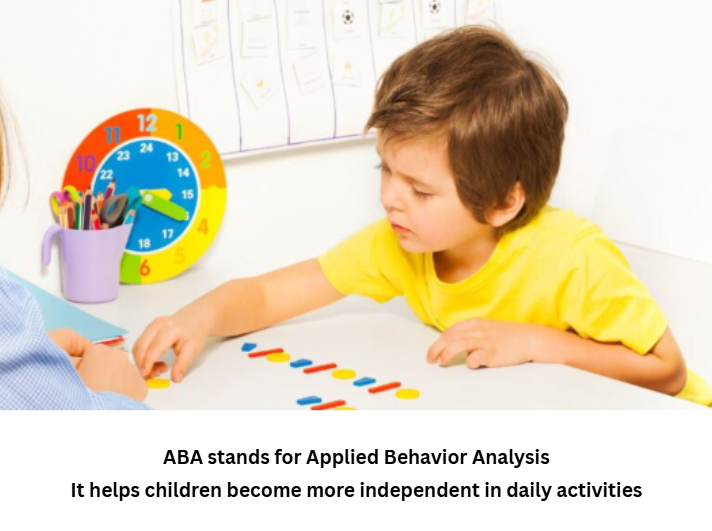
ABA stands for Applied Behavior Analysis. Each word has a purpose:
- “Applied” means it focuses on real-life skills
- “Behavior” refers to actions and responses
- “Analysis” means understanding why behaviors happen
When you put it all together, what ABA therapy stands for becomes clearer. It’s about understanding behavior and using that understanding to bring positive change.
ABA Therapy Explained in Everyday Language
Let’s break things down further with a simple explanation. When people ask for aba therapy explained, they usually want to know what actually happens during sessions.
A therapist observes how a child behaves, identifies areas that need improvement, and then creates a plan. That plan is broken into small, manageable steps. Each step is taught in a structured way, often through repetition and encouragement.
This is where the ABA therapy explained becomes practical. For example, if a child struggles to ask for something, the therapist might teach them how to use words, gestures, or communication tools. Each success is reinforced until the skill becomes natural.
The Purpose of ABA Therapy
Understanding the purpose of ABA therapy is important before starting. This approach is not just about changing behavior,it’s about improving quality of life.
The main goal is to help children become more independent and confident in daily situations. That includes things like:
- Communicating needs clearly
- Interacting with others
- Managing emotions
- Learning everyday routines
The true purpose of ABA therapy is long-term growth. It focuses on helping children succeed not just in therapy sessions, but at home, in school, and in the community.
How ABA Therapy Works in Real Life
Now that you understand what ABA therapy is, the next step is knowing how it works day to day.
Therapy usually starts with an assessment. A specialist observes the child and identifies strengths and challenges. Based on this, a personalized plan is created.
Sessions can take place at home, in a clinic, or even in school. The therapist works closely with the child using structured activities. These activities are designed to teach specific skills in a way that feels natural and engaging.
Applied behavior analysis (ABA) therapy relies heavily on consistency. Progress happens over time through repeated practice and reinforcement. Small improvements build up into noticeable changes.
Why ABA Therapy is Widely Used
One reason why ABA therapy is searched so often is that it’s one of the most commonly recommended therapies for autism.
It is backed by decades of research and is widely used by professionals across the world. Parents often notice improvements in communication, attention, and social behavior when therapy is applied consistently.
The structured nature of applied behavior analysis (ABA) therapy makes it especially useful for children who need clear guidance and routine.
Is ABA Therapy Right for Every Child?
While many families benefit from it, it’s natural to wonder if it’s the right choice.
Understanding the ABA therapy’s meaning helps here. It’s not a one-size-fits-all solution. The effectiveness depends on how well the program is tailored to the child and how consistently it is followed.
Some children respond quickly, while others take more time. The key is patience and proper guidance from trained professionals.
Common Misunderstandings About ABA Therapy
There are a few misconceptions that often confuse parents.
Some people believe it is too rigid, while others think it forces children to behave in unnatural ways. In reality, modern approaches are much more flexible and child-centered.
When ABA therapy is explained properly, it becomes clear that the goal is not to change who the child is, but to support them in functioning better in their environment.
Benefits of ABA Therapy
The benefits become clearer when you understand the purpose of ABA therapy in real-life situations.
Children often develop better communication skills, improved focus, and stronger social interactions. They also learn how to handle daily routines more independently.
Over time, these improvements can make a big difference not just for the child, but for the entire family.
How Parents Are Involved
Parents play a major role in the success of therapy. They are often trained to continue strategies at home so the child can practice skills in everyday situations.
This consistency helps reinforce what is learned during sessions. It also ensures that progress is not limited to therapy hours only.
Final Thoughts
By now, you should have a clear understanding of what ABA therapy is and why it is widely used.
From understanding the aba therapy meaning to learning what does aba therapy stand for, everything points to one goal,helping children develop essential life skills in a structured and supportive way.
When ABA therapy explained in simple terms, it becomes less intimidating and more practical. And when you truly understand the purpose of ABA therapy, it’s easier to decide if it’s the right path for your child.
People Also Ask
What is ABA therapy used for?
ABA therapy is mainly used to help children improve communication, behavior, and social skills, especially those with autism.
What does ABA therapy stand for?
It stands for Applied Behavior Analysis, a method focused on understanding and improving behavior.
Is ABA therapy effective?
Many studies and real-life experiences show that it can be effective when applied consistently and correctly.
At what age should ABA therapy start?
Early intervention is often recommended, but it can be helpful at different ages depending on the child’s needs.
How long does ABA therapy take?
The duration varies. Some children need a few months, while others may continue for several years, depending on progress.