
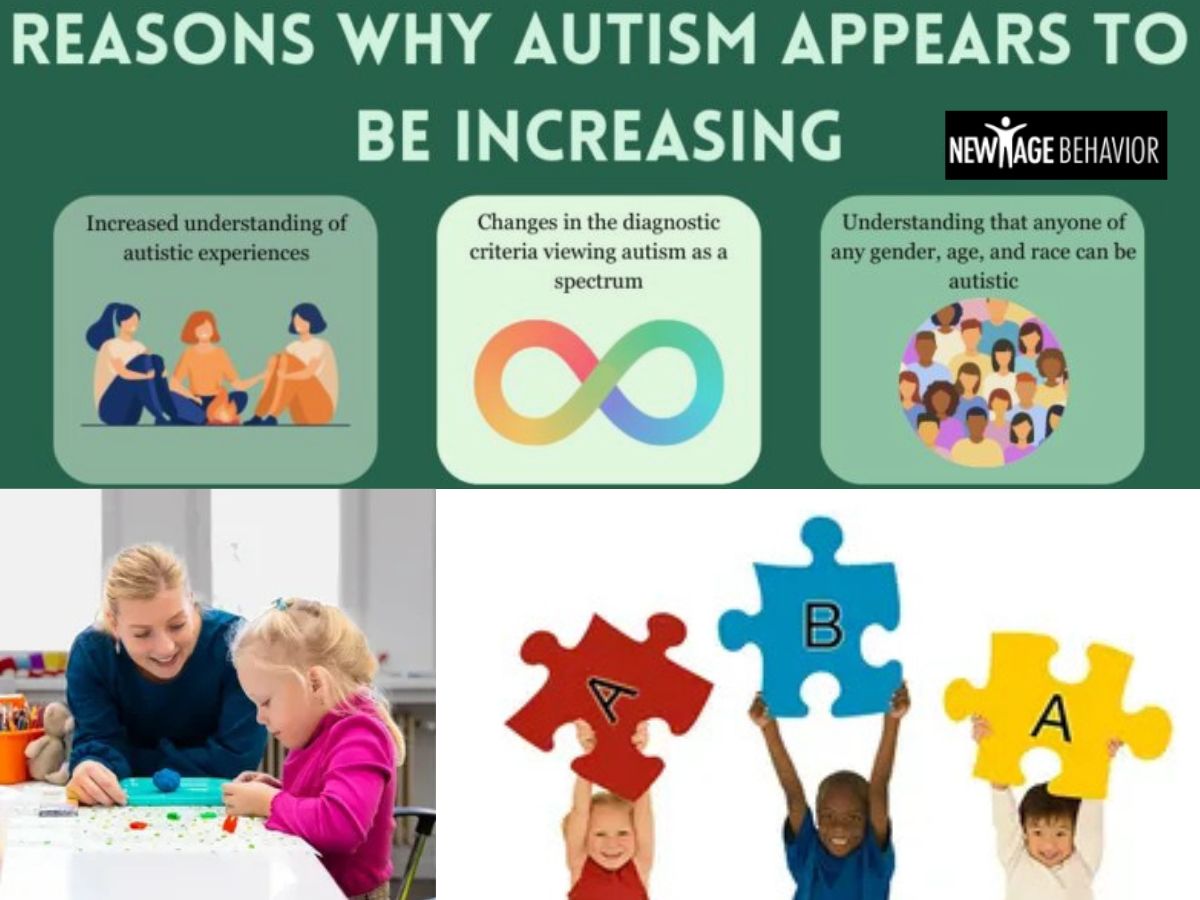
About 1 in 31, 8-year-old children in the U.S. communities studied were identified with autism in 2022, according to the CDC. Why is autism increasing? Better screening, greater awareness, and improved diagnosis have helped identify more people with autism. Autism is different for everyone and does not automatically mean intellectual disability, get worse with age, or go away.
Autism is more common than many people think. In recent years, more children have been identified with autism spectrum disorder (ASD). According to the latest data from the Centers for Disease Control and Prevention (CDC), about 1 in 31 children age 8 in the U.S. communities studied were identified with autism in 2022. That is about 3.2%.
But how common is autism, really? Why is autism increasing? Does the rise mean more people are becoming autistic, or are doctors simply getting better at identifying autism? And does autism mean a person has an intellectual disability or that their symptoms will get worse as they get older?
These are common questions for parents, families, and people who want to better understand autism. Autism is a spectrum, which means it can look very different from one person to another.
What Does Autism Prevalence Mean?
The word prevalence simply describes how common a condition is within a defined population at a particular time or period. It can be reported as a percentage or as a ratio such as 1 in 31.
For example, saying that autism prevalence is 3.2% means that about 3.2 out of every 100 children in the population being studied were identified with autism. It does not mean that exactly one child out of every 31 children everywhere has autism.
This distinction matters because autism statistics depend on who is being studied, where the study takes place, what diagnostic criteria are used, and how researchers identify autistic people.
The CDC’s 2022 data demonstrate this clearly. Across its 16 surveillance sites, autism identification among 8-year-olds ranged from about 1 in 103 in the Laredo, Texas site to about 1 in 19 in California. CDC says differences in evaluation, testing, and identification practices are likely important reasons for this variation.
How Common Is Autism Around the World?
Autism is found in countries and communities around the world. The WHO estimates that approximately 1 in 127 people worldwide had autism in 2021. The organization also emphasizes that reported prevalence varies widely between studies and that autism data remain limited in many low- and middle-income countries.
The OECD’s 2026 report found that autism diagnoses among children and young people have increased substantially across OECD countries. In the countries reviewed, diagnosis rates increased twofold to fourfold over roughly 15 years. However, the OECD warns that comparing autism rates across countries and time is difficult because diagnostic practices, data systems, access to healthcare, and definitions can differ.
This means there is no single worldwide autism percentage that can perfectly describe every country.A country with a higher recorded diagnosis rate may have better screening and easier access to assessment rather than necessarily having a much higher underlying rate of autism.
How Common Is Autism in the United States?
The latest CDC ADDM data show a long-term increase in the number of 8-year-old children identified with autism.
In 2000, the combined estimate was about 1 in 150 children. By 2008, it was about 1 in 88. In 2012, it was about 1 in 69. By 2016, it had reached approximately 1 in 54. The estimate increased to 1 in 44 in 2018, 1 in 36 in 2020, and 1 in 31 in 2022.
This is a major change in the number of children being identified. However, the numbers alone cannot tell us exactly how much of the increase represents a real change in autism prevalence and how much reflects better identification.
That is one of the most important points to understand when asking, “How common is autism?”
Why Is Autism Increasing?
One of the biggest questions parents, researchers, and healthcare professionals ask is, why is autism increasing?
The short answer is that researchers do not believe there is one simple reason. The increase in autism diagnoses appears to be influenced by several factors, including broader diagnostic definitions, improved screening, greater awareness, better identification of girls and children from different backgrounds, and changes in access to assessment and services.
There may also be biological and environmental factors that influence autism likelihood. Researchers continue to study these factors, but science has not identified one single cause that explains the increase.
Johns Hopkins researchers describe the rise in autism identification as a gradual increase rather than an “epidemic.” They point particularly to broader diagnostic definitions, successful screening programs, and increased awareness.
The OECD similarly reports that changing diagnostic practices, greater awareness, reduced stigma, earlier developmental surveillance, and broader interpretations of the autism spectrum are important factors behind increasing diagnosis rates.
Broader Autism Diagnostic Criteria
One major reason autism identification has increased is that the definition and classification of autism have changed.In the past, developmental conditions that are now included within the autism spectrum could receive different diagnoses. The modern concept of autism spectrum disorder covers a broader range of presentations than older diagnostic categories did.
Johns Hopkins notes that conditions such as Asperger syndrome and pervasive developmental disorder were previously diagnosed separately but are now included within the broader autism spectrum.
This means some people who might not have received an autism diagnosis decades ago may meet today’s criteria.It is therefore misleading to look at an old autism statistic and assume that doctors were measuring exactly the same condition in exactly the same way.
Better Autism Screening
Another major factor is improved screening. Pediatric healthcare has become more focused on monitoring developmental milestones and recognizing signs of autism earlier. Screening can help identify children who may benefit from a more detailed evaluation.
Johns Hopkins reports that successful public health programs have increased autism screening during early childhood, including screening around 18 to 24 months. Greater awareness among parents and healthcare professionals also means concerns may be raised earlier.
The CDC’s current early-identification programs encourage families and healthcare providers to monitor development and act when concerns appear. Better screening does not create autism. It helps identify people who may already be autistic but were previously missed.
Greater Awareness of Autism
Public awareness has also changed dramatically. Parents today are more likely to recognize possible differences in communication, social interaction, play, behavior, sensory processing, and development. Teachers and healthcare professionals are also more familiar with autism than they were decades ago.
Greater awareness can lead to earlier evaluation and diagnosis. It can also help adults recognize traits that may have gone unnoticed during childhood. Some adults seek an evaluation after learning more about autism and realizing that certain lifelong experiences may fit the autism spectrum.
Reduced Stigma
Autism is also more openly discussed than it was in the past. Families may be more willing to seek an evaluation when they notice developmental differences. Adults may also be more comfortable exploring whether an autism diagnosis could help them understand their needs.
This change in attitudes can increase the number of people who are identified without meaning that autism suddenly appeared in those individuals.
Better Identification of Girls
For many years, autism was more commonly recognized in boys than girls. The latest CDC data still show that boys were identified with autism more than three times as often as girls in the 2022 surveillance data. However, researchers increasingly recognize that autistic girls may present differently.
Some girls may have traits that are less obvious to teachers, parents, or clinicians. Some may consciously or unconsciously copy social behaviors they observe in other people, making their difficulties harder to recognize. Improved understanding of different autism presentations can therefore lead to more girls and women being identified.
Better Identification Across Racial and Ethnic Groups
Autism identification has also changed across racial and ethnic groups.
In the CDC’s 2022 surveillance data, autism identification was higher among Asian or Pacific Islander, American Indian or Alaska Native, Black, Hispanic, and multiracial 8-year-old children than among White children. These findings are important because older stereotypes sometimes portrayed autism as primarily affecting White boys.
Today’s data provide a much broader picture of who can be autistic. At the same time, access to diagnosis is not equal everywhere. Differences in healthcare access, language, awareness, income, geography, and availability of specialists can affect whether someone receives an evaluation.
Is Autism Actually Becoming More Common?
This question requires a careful answer.
The number of people being identified with autism has clearly increased. The CDC data show a large increase in identified prevalence among children over the past two decades. OECD data also show substantial increases in autism diagnoses across many countries. However, diagnosis rates and true underlying prevalence are not necessarily identical.
Imagine that a town has 100 autistic children, but only 30 are recognized and diagnosed. If improved screening later identifies 70 of those children, the recorded autism rate will rise even though the number of autistic children did not suddenly increase from 30 to 70.
This is why researchers carefully study diagnostic practices, screening, access to healthcare, and changes in the population before concluding that autism itself has increased by a specific amount. The current evidence supports a combination of factors rather than a single explanation.
Is Autism an Intellectual Disability?
No. Autism is not the same thing as intellectual disability.
Autism spectrum disorder is a developmental condition involving differences in social communication and interaction, along with restricted or repetitive behaviors, interests, or activities. Intellectual disability is a separate condition involving significant limitations in intellectual functioning and adaptive behavior.
- A person can be autistic without having an intellectual disability.
- A person can also have both autism and intellectual disability.
The latest CDC data illustrate this difference. Among 8-year-old children identified with autism who had available cognitive information, 39.6% were classified as having intellectual disability. That means the majority of children in that particular group did not meet the CDC’s definition of intellectual disability based on the available cognitive data.
Autistic people can have a wide range of intellectual abilities. Some have significant cognitive disabilities, while others have average or above-average intellectual abilities. WHO also emphasizes that intellectual functioning among autistic people varies widely.
This is one reason the word “spectrum” is so important.
Autistic vs Autism: What Is the Difference?
The terms autistic and autism are related, but they are not interchangeable.
“Autism” refers to the developmental condition itself. “Autistic” is an adjective used to describe a person who is on the autism spectrum.
For example, you might say, “She has autism,” or “She is autistic.”
Many autistic people prefer identity-first language such as “autistic person,” while others prefer person-first language such as “person with autism.” Language preferences can differ from person to person. The most respectful approach is to follow the individual’s preference when you know it.
The important point is that autism is not something that defines every part of a person’s identity. An autistic person can also be a student, parent, employee, artist, athlete, friend, sibling, or professional.
Does Autism Spectrum Disorder Get Worse With Age?
Autism does not simply follow a pattern where it always gets worse as someone becomes older.
The characteristics and support needs associated with autism can change throughout life. WHO states that autistic people’s abilities and needs can evolve over time.
A child may need significant support with communication at one age and develop stronger communication skills later. Another person may become more independent with daily living skills but experience new challenges when social, academic, or workplace expectations become more complex. Changes in the environment can also make autism seem more or less difficult.
For example, a child may function comfortably in a predictable classroom but struggle during a major transition to middle school. An adult who manages well at home may need additional support when starting a demanding job. This does not necessarily mean autism itself is getting worse. Instead, the person’s environment, expectations, skills, health, stress level, and support needs may have changed.
Can Autism Symptoms Change Over Time?
Yes. Autism is a lifelong developmental condition, but the way it presents can change.
Communication skills may improve. Daily living abilities may develop. A person may learn strategies for handling sensory challenges or navigating social situations. At the same time, new challenges can appear as life becomes more complicated.
For example, a teenager may understand basic social interaction but struggle with friendships, school pressure, independence, or emotional regulation. An adult may have strong academic abilities but find workplace communication or sensory environments difficult.
The right question is often not, “Will autism get worse?” but rather, “What support does this person need at this stage of life?”
Does Autism Go Away?
Autism does not simply disappear with age. A person who is autistic remains autistic throughout life, although their abilities, behaviors, coping strategies, communication skills, and support needs can change significantly.
This does not mean that progress is impossible. Quite the opposite.
Early intervention and appropriate support can help children develop communication, learning, social, and daily living skills. The CDC states that early intervention can greatly improve development and that intervention can be helpful at any age.
The goal should not be to promise that autism will “go away.” The goal is to help the person communicate, participate, learn, build relationships, develop independence where possible, and have a good quality of life.
Why Early Identification Matters
- Children can get support earlier: Early identification helps families understand a child’s needs sooner.
- Families can find the right services: Parents can connect with helpful services such as speech therapy, occupational therapy, physical therapy, and behavioral support.
- Early support can help development: Starting appropriate support early may help children build communication, social, learning, and daily-life skills.
- Parents don’t always have to wait for a diagnosis: Depending on the child’s needs and location, developmental services may be available even before a formal autism diagnosis.
- Acting early is important: If parents or caregivers notice developmental concerns, they can talk with a healthcare provider and ask about evaluation and available support.
Why Autism Rates Can Look Different From One Community to Another
If one community reports 1 in 19 children and another reports 1 in 103, it can be tempting to assume that something about the location itself is causing autism. The data do not support that simple conclusion.
The CDC says differences in autism prevalence between communities are likely influenced by differences in evaluation and testing practices. Communities can also differ in healthcare access, educational systems, awareness, specialist availability, and how developmental concerns are identified. This is why autism statistics should always be read with context. A higher reported rate may sometimes indicate that a community is doing a better job finding children who would otherwise remain unidentified.
Autism and Genetics
Genetics play an important role in autism. Autism is not caused by one single gene in most cases. Researchers have identified many genetic differences and genetic conditions that can be associated with autism.
CDC explains that some people with autism have a known genetic condition, while the causes for others remain unknown. Scientists believe multiple factors can work together to influence brain development.
Having a family member with autism can also be relevant when considering developmental risk. However, genetics do not allow someone to predict with certainty whether a particular child will be autistic.
Autism and Pregnancy or Birth Factors
Researchers have also studied factors associated with autism during pregnancy and around birth.
WHO lists several factors that have been associated with a higher likelihood of autism, including advanced parental age, maternal diabetes during pregnancy, prematurity, severe birth complications, low birth weight, and certain prenatal exposures.
It is important to understand the difference between a risk association and a proven direct cause. When researchers say that a factor is associated with autism, it does not mean that the factor automatically causes autism in an individual child. Autism is believed to involve many interacting genetic and developmental factors.
Do Vaccines Cause Autism?
No high-quality evidence supports the claim that childhood vaccines cause autism.
The World Health Organization’s most recent review of evidence published from 2010 through August 2025 found that the strongest studies do not support a causal association between vaccines and autism. WHO concluded that vaccines, including those containing thiomersal or aluminum, do not cause autism.
The vaccine-autism claim originated largely from a 1998 paper that was later found to be fraudulent and retracted. Subsequent research has repeatedly investigated the question.
Because vaccine policy is an important public-health issue, people should rely on current evidence from qualified medical and public-health organizations rather than social media claims or isolated studies.
Is the Increase in Autism a Sign of an Epidemic?
The word “epidemic” can be misleading when discussing autism.
Johns Hopkins researchers explain that autism identification has increased substantially over the past two decades, but describe the change as a gradual rise associated largely with broader diagnostic definitions, improved screening, and increased awareness rather than a sudden epidemic.
This distinction matters because an increase in diagnosis does not automatically prove that a new environmental cause has suddenly created a huge number of new cases.
The better question is why more people are being identified today than in the past.
The evidence points to a combination of improved recognition and changes in diagnostic practices, alongside ongoing research into biological and environmental
Autism Is a Spectrum for a Reason
There is no single way to be autistic. One autistic person may communicate verbally and live independently. Another may use an augmentative or alternative communication system and need extensive daily support.
One person may have strong academic skills but struggle with sensory overload. Another may have an intellectual disability along with autism and need lifelong assistance. WHO emphasizes that autistic people’s abilities and support needs vary widely and can change over time.
This is why comparisons such as “mild autism versus severe autism” can sometimes oversimplify a person’s needs. A person may have relatively low support needs in one area and significant support needs in another.
What Families Can Do After an Autism Diagnosis
An autism diagnosis can bring many emotions, but it can also help families better understand their child’s needs. The next step is to focus on the individual rather than worry about the future. Depending on their needs, a child may benefit from speech therapy, occupational therapy, behavioral support, educational help, or social skills services. The right support plan is different for every person.
The Benefits of Early Support
Early support can provide children with opportunities to develop useful communication, learning, social, and daily living skills. This does not mean that every autistic child will develop in exactly the same way or that early intervention guarantees a specific outcome.
It means that identifying needs earlier gives families and professionals more time to understand those needs and provide appropriate support. The CDC states that early intervention can greatly improve development and that intervention can remain helpful at different ages.
Final Thoughts
So, how common is autism? The latest CDC data shows that about 1 in 31 8-year-old children were identified with autism in 2022. The rise in diagnoses may be linked to better screening, greater awareness, earlier identification, and changes in diagnostic criteria.
Autism is different for every person. It does not automatically mean intellectual disability, and it does not necessarily get worse with age. Support needs and abilities can change over time.
Autism does not simply go away, but the right support can help children and adults build skills, communicate, learn, and live fulfilling lives.
FAQs
Does autism spectrum disorder get worse with age?
Autism does not automatically get worse with age. A person’s skills and support needs can change as they grow and face new challenges.
Why are autism diagnoses more common today?
Improved screening, increased awareness, and broader diagnostic criteria have helped identify people who may have been missed in the past. This includes girls, adults, and people with less obvious traits.
Can autistic children improve over time?
Yes, autistic children can develop communication, social, learning, and daily living skills. Progress varies from person to person and depends on individual needs and support.
Is autism more common in boys than girls?
CDC data show that autism is identified more often in boys than girls. However, some girls may be overlooked or diagnosed later because autism can present differently.
What causes autism?
There is no single known cause of autism. Research suggests that multiple genetic and developmental factors can influence how the brain develops.
Does early intervention help children with autism?
Early intervention can support communication, learning, social skills, and daily living abilities. Support can also be helpful for older children, teenagers, and adults.
Does autism go away?
Many people ask, “does autism go away?” Autism is lifelong, so it does not simply go away. However, the right support can help autistic people develop skills and become more independent over time.
Read more about: How much does aba therapy cost